Keepin' it real ... very real
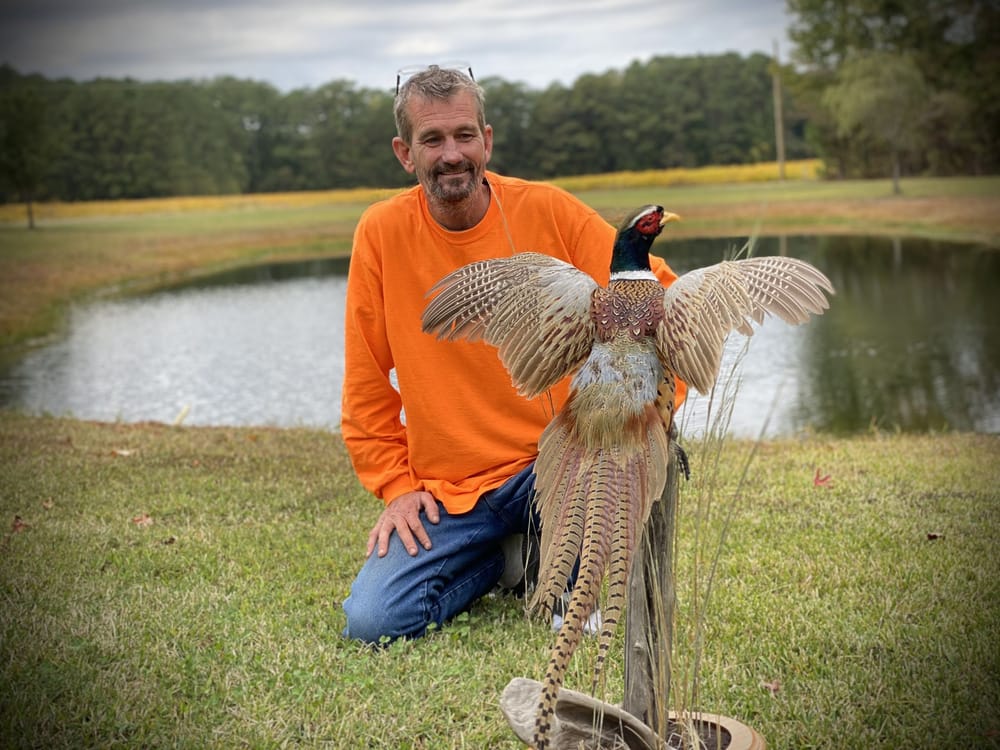
The pheasant rose from the scrubs, its wings in full flare as it tried to escape to the sky, thinking that there it would be safe from a predator.
Alas, a hunter was just feet away, gun at the ready to harvest a tasty meal from a moment of a successful hunt.
The memory no doubt burned into the mind of the human, who later decided to preserve the moment with a magnificent work of art.
Taxidermy has always afforded hunters and anglers the opportunity to display their trophy harvests for a lifetime.
When it comes to land mammals and birds, a rare handful around these parts produce the kind of stuffed critter so real looking that it appears ready to turn and flee.
Tim McMahon, of Pasquotank County, N.C., is one such taxidermist.
His freezers are full of pelts that will be thawed, stretched onto mannequins, and refined in lifelike detail.
Ducks, turkey, a variety of other birds, black bear, deer. Lots of deer.
Some will be full body mounts set in their original habitat. Others are shoulder mounts featuring only the head and shoulders - set to hang on a wall.
“I’ve got six of my seven deep freezers slam full of hides,” McMahon, 50, said while taking a needed break from working on a full-body bear. “And this is hunting season, so it’s going to really get busy.”
McMahon has been preserving wildlife for about 32 years. He says that if you are willing to work hard and perfect the craft, you can make a “pretty good living.”
He has customers from all over the country and has mounted everything from a simple duck to exotics from Africa and Asia. He rarely does reproduction fish mounts.
“Bear, deer, turkeys and ducks are by far the majority of what I do,” he said.
McMahon said he likes to have photographs of the animals he mounts so that he can get all the right details in one of his pieces.
“That’s where the attention needs to be paid. That’s the hardest part,” he said. “When a customer picks up their mount and they recognize something like a discolored spot in the fur, just like it was when they killed it, that’s one of the best feelings.”
It also keeps people coming back, which means his work will take longer to be returned. A common saying in the taxidermy world is that if an artist can get you a mount in a few weeks it’s for two reasons - you aren’t getting the quality and the artist likely doesn’t do a lot of work.
“It takes a certain amount of time to go through the process to make sure it’s done right, to make sure it’s going to hold up over time,” McMahon said. “I don’t want to tell people it’s going to take a year to get their bear to them, but …”
Covid-19 slowed his process, as getting mannequins, glass eyes and other supplies all but came to a halt.
“It was a disaster for every taxidermist out there. Things are starting to improve and I’m able to get more stuff done a little faster.”
Unfortunately, this isn’t the time of year that affords much time catch-up.
“I’ll go a day or two with no calls then have days with dozens of calls,” he said. “Sometimes I’ll have a line out here with people waiting to drop off their animal.”
Finding a good taxidermist is akin to having that special hair dresser that becomes invaluable when a new hairdo is wanted.
As McMahon picked up the pheasant to take it back into his shop, he noticed that one of the wing tips wasn’t pointing at exactly the correct angle.“Can you take the pictures over? I like everything to be exactly right.”