Do this, don't do that ... just go fishing, OK?
We're open for business, now we're not. First it was "masks don't do you any good" and now it's "you gotta wear one or else."
Here's some advice most of you don't need - go fishing.
And there couldn't be a better time to do so. Area waters are just about full of all the summertime species we love to target in all the places we like the most - from freshwater rivers and lakes to saltwater inlets, to the Chesapeake Bay and Carolina sounds, to the deep blue waters off our coast.
This is a great time of year to hit the water and there couldn't be a more needed outlet during what has to be the strangest time in, most likely, all of our lives.
So go fishing, people, even if it's just sitting on the bank of a pond with a cane pole and bobber.
It does a mind good, and Lord knows we could all use that right now.
SOUTHEASTERN VIRGINIA
The only summer species to yet be confirmed to be swimming in local waters is the tarpon, and that most likely is because it takes a while for the "secret" to get out.
Every other player is in the house.
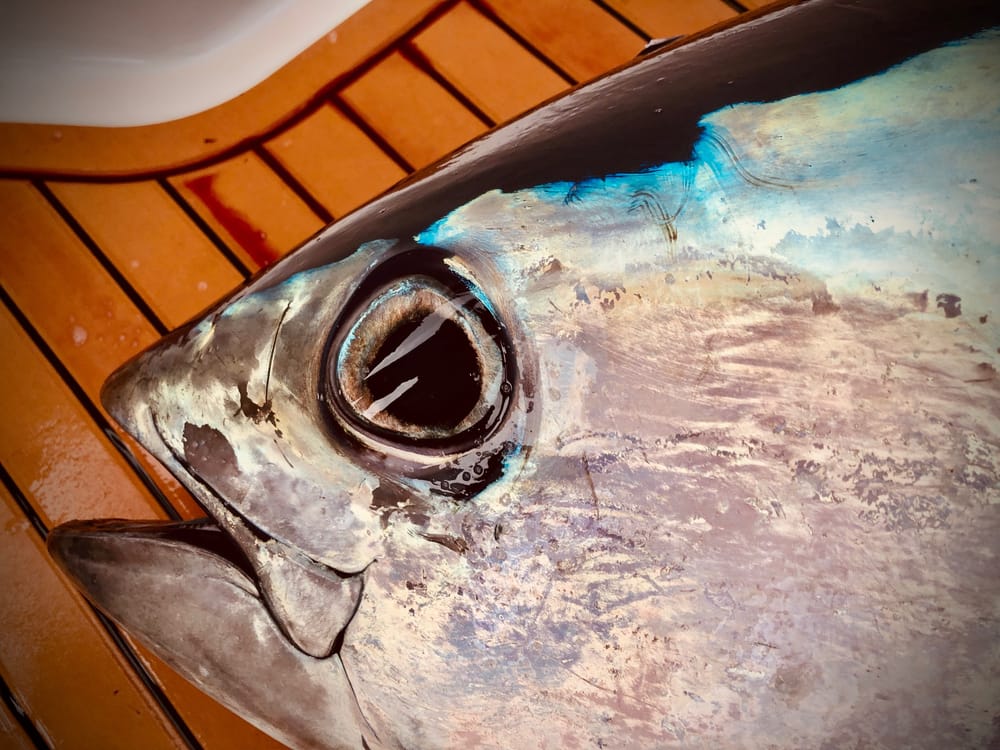
Starting offshore, yellowfin tuna continue to cooperated in good numbers, with quite a few bigeye in the mix. Get 'em in fast, boys and girls, least parts of them become an easy meal for shark.
It's been determined by national fisheries biologists that shark numbers are in danger, but don't tell that to any captain out fishing along the East Coast. They're seeing more shark than ever before, and, trust me, they're only seeing a small portion of what's really out there.
A few billfish have been caught and released and that action is only going to improve as we move through July.
Deep droppers are finding good numbers of tilefish and rosefish, with a few snowy grouper also being taken. Expect some sea bass as well.
Coastal wrecks and navigational structures are giving up some of the best spadefish action in years, and triggerfish and joined in on the action.
Along the coast, trollers are finding bluefish, Spanish mackerel and loads of ribbonfish. Captains taking a few bluefish out a few miles can expect them to attract lots of small shark like blacktips, with some hammerhead mixed in.
Big red drum and cobia also are available along the coast.
Reds also are being taken around the mouth of the bay and along the shoals.
Most black drum have moved from Eastern Shore inlets to the islands of the Chesapeake Bay Bridge-Tunnel.
Also available along the span are spadefish, triggerfish and sheepshead.
The CBBT also is offering up flounder, which also can be found around the Back River, the Hampton Bar, Eastern Shore backwaters, bay and inshore wrecks and in all three southside inlets.
Cobia are being taken throughout the lower bay, some by anglers using bait and others by sight-casters.
Speckled trout and puppy drum are cooperating in all three inlets and in the Elizabeth and York rivers.
NORTHEASTERN NORTH CAROLINA
Tuna remain the hot ticket off the Outer Banks, but plenty of dolphin are starting to show and billfish numbers are on the rise.
A large variety of smaller species are being taken from coastal wrecks.
Coastal anglers are finding bluefish, cobia, Spanish mackerel, red drum and shark.
Inshore, inside the inlets and in the sounds, casters are enjoying some fantastic speckled trout catches, with plenty of puppy drum mixed in.
Surf casters and pier anglers can expect a mixed bag that includes bluefish, puppy drum, speckled trout, sea mullet, spot, croaker, skate, shark and pompano. Some of the biggest pompano seen in recent years have been beached.
FRESHWATER
Largemouth bass have moved into a summer pattern where the best action is going to be extremely early and late in the day. Fish can be taken during the hottest hours, but you have to look for them deep and fish for them slow.
Where grass is available, like in Back Bay, topwater frog patterns continue to produce.
Crappie have moved to deeper cover, but are still being taken.
Bluegill are thick around most shorelines, but bigger fish will be found in waters between 5 and 10 feet deep. That's also where you will find the biggest shellcracker. Bottom-bouncing pieces of nightcrawler or whole reg wigglers works best in deeper water.
Catfish will be found in deeper holes, especially in tidal river systems.